
What Is CAD/CAM Dentistry
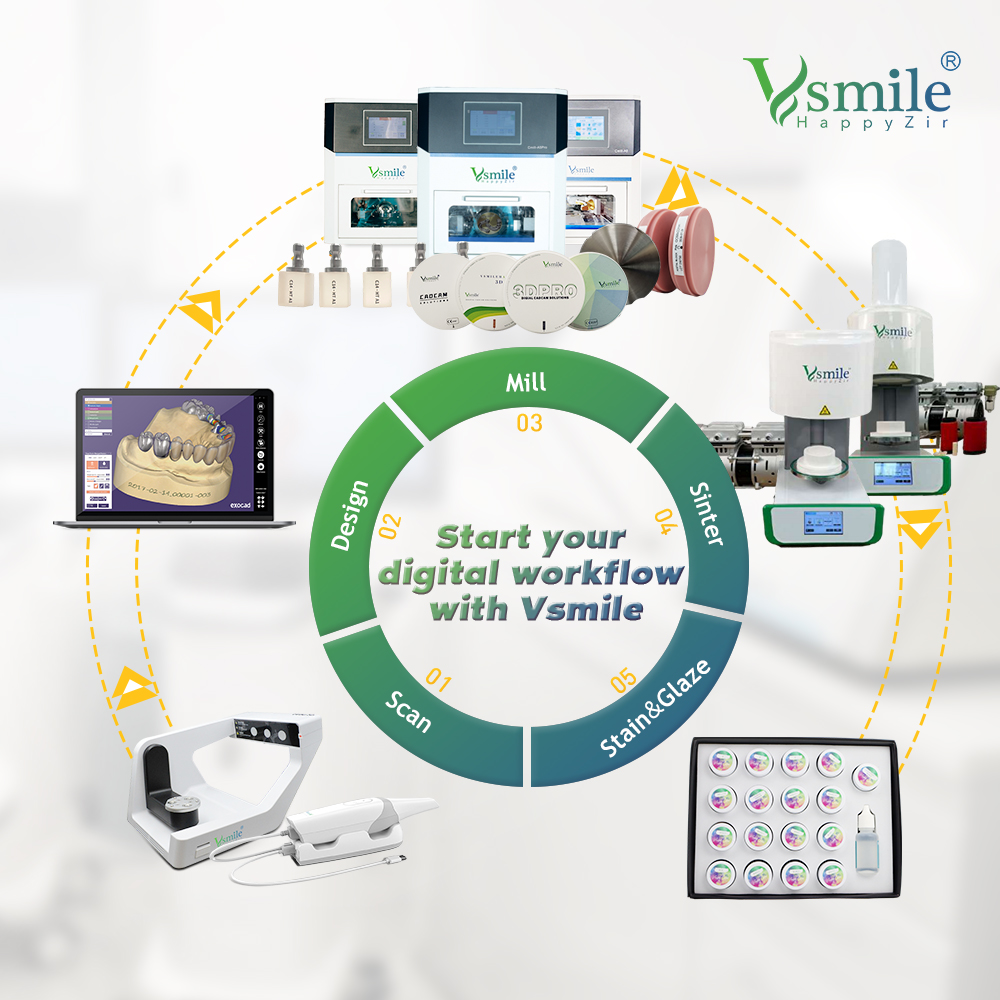
In the realm of dental craftsmanship, a silent revolution has unfolded over decades, spearheaded by Computer-Aided Design (CAD) and Computer-Aided Manufacturing (CAM). Since 1985, these technological allies have not only shaped precision tools but have fundamentally transformed dental restorations and prostheses.
CAD/CAM technology has become a cornerstone in dentistry, revolutionizing the field by delivering efficiency and precision. This evolution offers benefits not only to dental professionals but also to patients seeking dental solutions. The process varis from 45 minutes to 2 hours, significantly reducing time and effort compared to traditional methodologies.
Here is the process of digital dentistry:
1. Tooth Preparation: Skilled professionals carve out a pristine site by removing decay or structural imperfections.
2. Intraoral Scanning: Optical scanners capture the tooth's essence, crafting a bespoke 3D tapestry.
3. Restoration Design: The digital atelier transforms these 3D images into a blueprint, utilizing the sorcery of CAD software.
4. Milling: A milling maestro sculpts crowns, veneers, or bridges from a single ceramic block, bringing the design to life.
5. Sintering and Polishing: The creation undergoes a ritual of staining, glazing, and polishing, emerging in a naturalistic splendor.
6. Cementation: The magnum opus finds its permanent place, completing the crescendo of a radiant smile.
Even thought there are many advatages of CAD/CAM dentistry, while not every tooth can be treated with CAD/CAM dentistry, so talk to your dentist about your best options.
The Significance Of Dental Porcelain Furnaces
What Effects The Life of Heating Elements?
Related Article


