Digital Solutions for Small Dental Labs: Insights for the Dominican Republic
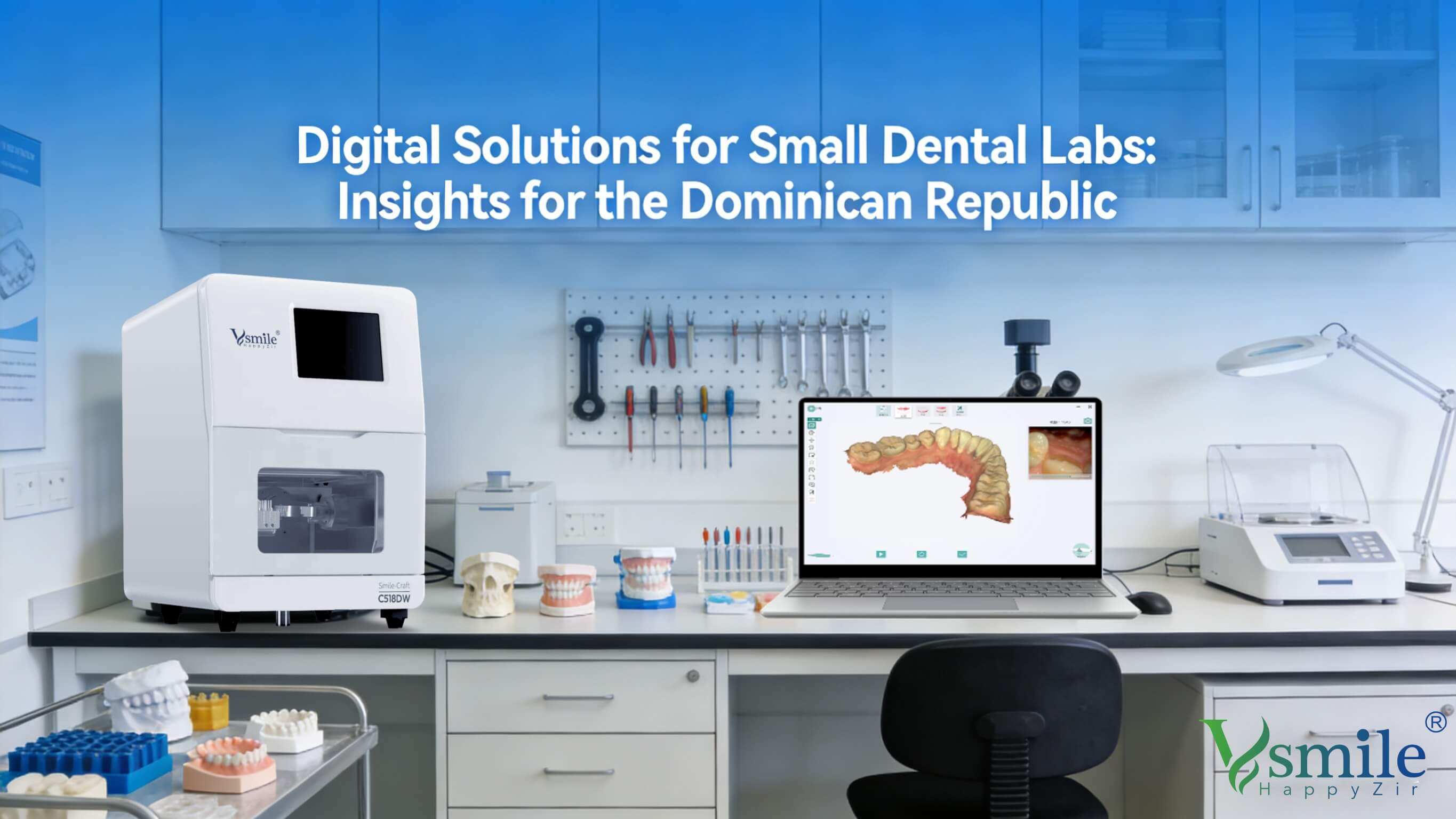
Dental laboratories in the Dominican Republic are operating in a dynamic market where private dental clinics and growing cosmetic dentistry demand are driving higher expectations for turnaround time, restoration accuracy, and aesthetic outcomes. Many small labs—particularly those with fewer than 10 technicians—face pressures to balance quality, efficiency, and cost while serving both local clinics and growing dental tourism clientele in Santo Domingo and Punta Cana.
Integrating digital solutions has become a practical way for these labs to stay competitive. However, the most successful implementations are experience-driven, addressing specific workflow bottlenecks rather than acquiring every new device on the market.
Understanding the Local Context
Several factors make the Dominican market unique for small dental labs:
-
High cosmetic dentistry demand: Local clinics are increasingly offering veneers, all-ceramic crowns, and implant-supported restorations, creating a need for labs to produce precisely fitting, aesthetic restorations quickly.
-
Small lab size: Many labs operate with limited personnel, which makes workflow efficiency and minimal rework critical.
-
Material availability and cost sensitivity: Importing high-quality zirconia, PMMA, and lithium disilicate materials can be expensive, so labs must optimize usage and reduce waste.
-
Dental tourism: Some labs serve patients indirectly through clinics catering to tourists, increasing the demand for fast turnaround and reliable quality.
In this context, digital solutions can reduce errors, improve reproducibility, and streamline communication with clinics, making them a practical choice even for smaller operations.
Digital Scanning in Practice
Accurate capture of patient anatomy is the foundation of high-quality restorations. Small Dominican labs typically rely on a combination of:
-
Lab Scanners: Used to digitize stone models or traditional impressions. Even in a small lab, a compact desktop scanner can help standardize captures and maintain consistent quality. For example, a lab might use a desktop scanner to review margin lines and occlusal contacts before milling, reducing remakes caused by misalignment.
-
Intraoral Scanners: Many clinics in Santo Domingo now send intraoral scans directly to labs, which can reduce turnaround time and improve fit for anterior crowns or single-unit restorations. These scans help technicians anticipate adjustments before milling and minimize provisional fitting issues.
Local labs have observed that integrating scanning data from clinics with in-house model scanning improves both fit consistency and workflow predictability.
Milling Machines and Material Considerations
After scanning, milling transforms digital designs into physical restorations. Material properties, machine calibration, and finishing practices all influence the final outcome.
-
Zirconia is widely used for posterior crowns and implant frameworks, valued for its strength. Handling requires careful sintering to ensure dimensional stability.
-
PMMA is useful for provisional restorations and try-ins, particularly in small labs where rapid feedback from clinics helps confirm occlusion and margins.
-
Lithium Disilicate or glass ceramics are preferred for aesthetic anterior restorations, offering translucency that approximates natural teeth. Handling requires controlled milling and careful post-processing to preserve esthetic properties.
Labs in the Dominican Republic have reported that refining milling parameters for each material type—without adding unnecessary complexity—helps reduce remakes and maintain consistent quality.
Integrating Digital Workflows Locally
For small labs, implementing digital solutions involves more than purchasing equipment:
-
Workflow alignment: Labs must ensure scans, designs, milling, and finishing steps are coordinated. Even minor mismatches between intraoral scans and lab scanning can create rework.
-
Staff training: Technicians need hands-on experience with both hardware and software to understand material-specific behavior and CAD adjustments.
-
Process documentation: Recording standard practices for each material, milling strategy, and finishing approach helps maintain quality despite staff turnover or variable case types.
By addressing these factors, labs in Santo Domingo, Santiago, and other regions can achieve greater efficiency and reduce costly remakes even with small teams.
Observations from Dominican Labs
Small laboratories that have adopted digital tools report improvements such as:
-
Fewer adjustments on provisional crowns when intraoral scans are integrated.
-
More predictable results for both anterior and posterior restorations.
-
Reduced material waste due to careful milling and controlled sintering practices.
These improvements stem from experience-based workflow integration rather than simply purchasing equipment, emphasizing that practical application is as important as technology itself.
Objective Examples of Digital Tools
While not promoting brands, the following examples illustrate tools often adopted in Dominican labs:
-
Desktop lab scanners for precise model digitization.
-
Intraoral scanners for direct clinic-to-lab digital impressions.
-
Multi-material milling machines capable of processing zirconia, PMMA, and lithium disilicate efficiently.
-
Consistent use of high-quality restorative materials, with documented handling practices to maintain reproducibility.
These technologies, when applied thoughtfully, allow small labs to deliver reliable, high-quality restorations without dramatically increasing staff workload or costs.
Conclusion
For small dental labs in the Dominican Republic, digital solutions offer tangible benefits, but their effectiveness depends on how they are integrated into daily workflows. Understanding local market dynamics—such as the emphasis on cosmetic dentistry, small team size, and the growing influence of dental tourism—helps labs choose which tools provide the greatest impact.
By combining careful scanning, material-specific milling, and staff expertise, small labs can reduce remakes, improve turnaround times, and maintain high-quality restorations. The goal is not to adopt every new device, but to apply digital tools thoughtfully and consistently, tailored to the realities of the local market.
Milling Titanium: What Small Dental Labs in the Dominican Republic Should Know
Lab Scanner vs Intraoral Scanner: Which One Is Right for Your Dental Practice?
Related Article